


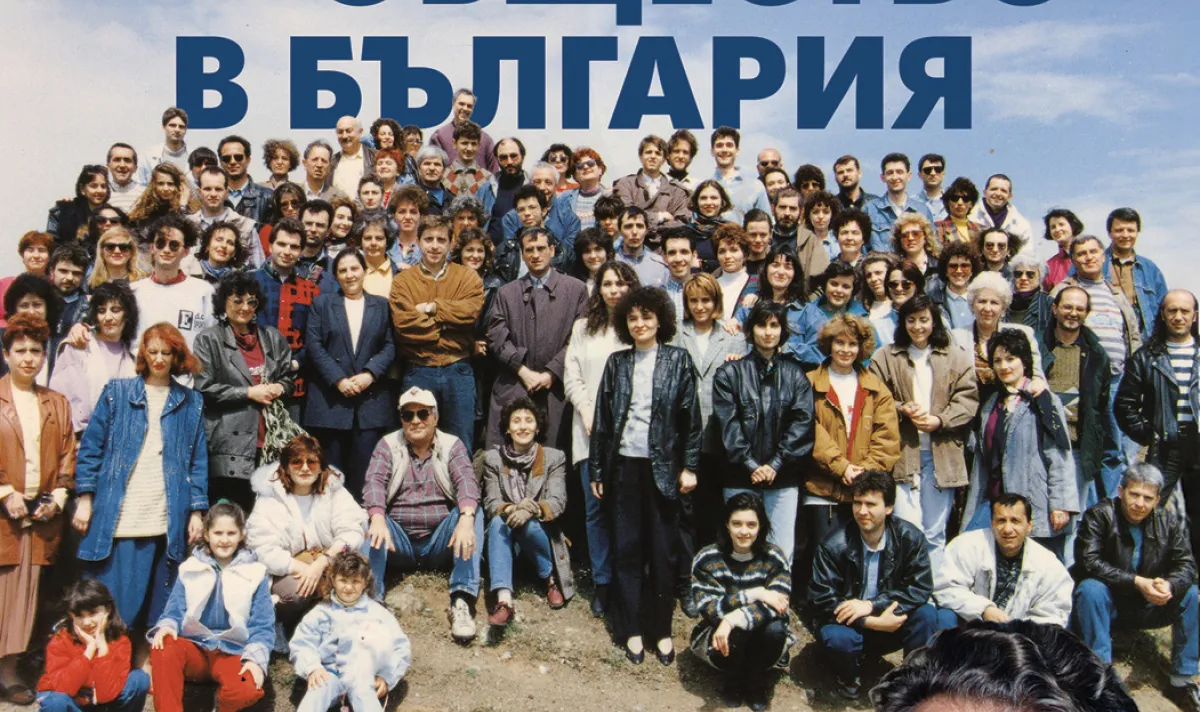

In 1990, a chance meeting with George Soros changed the direction of the author’s professional career. Invited to head an organization that would support democratic change in Bulgaria, he gained first-hand insight into the ideas of the open society developed by Karl Popper and Soros himself – ideas that left a lasting mark on the country’s development.
This book is a personal account of the years of transition – of one team’s efforts to create opportunities where none had existed until recently. Of thousands of Bulgarians who were given the chance to study and develop around the world. Of the birth of institutions such as New Bulgarian University and the American University in Bulgaria. Of the first steps of the internet in the country. Of support for the media, education, the judicial system and culture.
It is also a story about philanthropy in its many forms – from scholarships and books to technology and expert knowledge; about projects in the arts, the preservation of cultural and spiritual heritage; about caring for vulnerable groups and building ties between the countries of Eastern Europe and the Balkans.
The author’s account is complemented by the recollections of more than 100 people involved in the work of the Open Society Foundation – Sofia during the 1990s – voices that revive the difficulties, hopes and meaning of a time of profound change.
The book “Open Society in Bulgaria”
Tells in the first person the story of the early years of the transition
“Open Society in Bulgaria”, a memoir by Georgi Prohaski published by Knigomania, will be released on November 25, 2026. It traces the creation of the Open Society Foundation in Bulgaria and its role in the democratic changes between 1990 and 1997. The author’s personal recollections and the accounts of more than 100 people show how opportunities for education, professional development and civic engagement were supported during the early years of the transition.
In 1990, a chance meeting with George Soros changed Georgi Prohaski’s professional path. He was invited to head an organization that would support democratic change in Bulgaria. It was then that he became closely acquainted with Karl Popper’s ideas about the open society and adopted them as his philosophy of life.
Prohaski recounts the seven years during which he led the foundation. His account is joined by the recollections of people he worked with and of people who received support from “Open Society”. Their testimonies trace the foundation’s contribution to the creation of New Bulgarian University and the American University in Bulgaria, the arrival of the internet in the country, and the development of the media, education and law enforcement. Thousands of Bulgarians were given the opportunity to study abroad and develop professionally, and to pursue their dreams and ideas, thanks to “Open Society”.
Blaga Dimitrova, Radoy Ralin, Yordan Radichkov, Boris Hristov, Rayna Kabaivanska and dozens of other artists shared the foundation’s ideas from the time of its establishment.
“It would be immodest of me to assess the extent to which the Foundation influenced the modernization of our society after 1989, but I am certain that it helped thousands of Bulgarians realize their ideas and dreams, feel free and create their future as they saw it. This cannot have left no trace,” writes Georgi Prohaski.
The book is about philanthropy, support for projects in the arts and culture, initiatives to preserve cultural and spiritual heritage, and programs assisting vulnerable groups. Part of the account is devoted to efforts to build ties between the countries of Eastern Europe and the Balkans.
“Open Society in Bulgaria” returns to questions that are still being asked today. What motivated financier and philanthropist George Soros to support democratic change in Bulgaria? Which people stood behind the ideas of the open society? How was funding secured for scholarships, projects and new institutions? The answers come from the participants in these processes, who preserve the memory of the difficulties and hopes of a time of profound change.
About the author
Georgi Prohaski holds a PhD in economics. From 1987 to 1992, he taught at the University of National and World Economy, and from 1990 to 1997 he was executive director of the Open Society Foundation – Sofia. Between 1997 and 2001, he was a chief adviser to the Council of Ministers and chair of the Bulgarian Stock Exchange – Sofia. In 1997, together with Aleksandar Bozhkov, he founded the Centre for Economic Development, which he still heads today.