


Today marks 127 years since the birth of Alfred Hitchcock (1899-1980) — the author of “Psycho“, “Vertigo“ and “Rear Window“, whose name has become synonymous with cinematic suspense. Born in Leytonstone, London and raised in a Catholic family, Hitchcock started out in cinema from an unexpected place: first working for a telegraph cable company, then drawing interludes for silent films at the Famous Players–Lasky studio in Islington. Just a few years later, he was directing and sowing the seeds of a style that would change viewing habits forever.
From the British “talking“ debut to Hollywood
Before setting foot in America, Hitchcock signed “The Lodger“ (1927), considered by critics to be his first “real“ Hitchcockian film, and with “Blackmail“ (1929) he made the first full-length British talking film. In 1939, he was attracted to Hollywood by producer David O. Selznick, and his first American film, “Rebecca“ (1940), won the “Oscar“ for Best Picture — the only winner of the award among the titles he directed.
Awards and recognitions
Despite five nominations for the “Oscar“ for directing, Hitchcock never won a competitive statuette — the Academy compensated with Irving G. Thalberg (1968). A BAFTA Fellowship (1971), an AFI Life Achievement Award (1979) and a knighthood (KBE, 1980) followed. It was a rare “career path“ of recognition that underscored how slowly institutions were catching up to his influence.
“The difference between surprise and suspense?“ — Hitchcock asked and answered himself: if the viewer knows that there is a bomb under the table, every banal conversation becomes unbearably tense. This formula underlies the construction of dozens of his scenes and explains why his films “work“ decades later.
Hitchcock's cinematic legacy - pioneer and visionary
-
“Vertigo“ The dolly zoom effect—that dizzying sliding of space—was popularized by Vertigo (1958), developed on set with cinematographer Ermine Roberts and turned into a classic technique.
-
Shooting "without editing": in Rope (1948), Hitchcock experimented with the illusion of a single long shot—a series of about ten consecutive 10-minute "rolls" with precisely hidden cuts. To this day, the film is a textbook on spatial choreography.
-
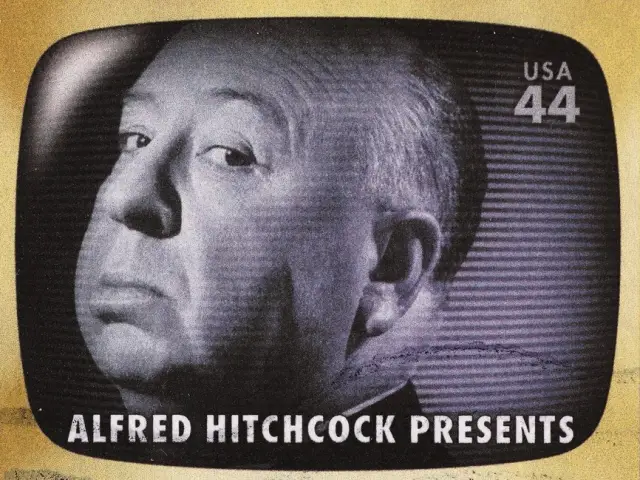
The Television Hitchcock: with the anthology Alfred Hitchcock Presents (1955-62; later The Alfred Hitchcock Hour, 1962-65) the director turned his own silhouette and the sarcastic “Good evening“ into a global brand, and television — into a platform for his authorial tone.
The horror masterpiece „Psycho“
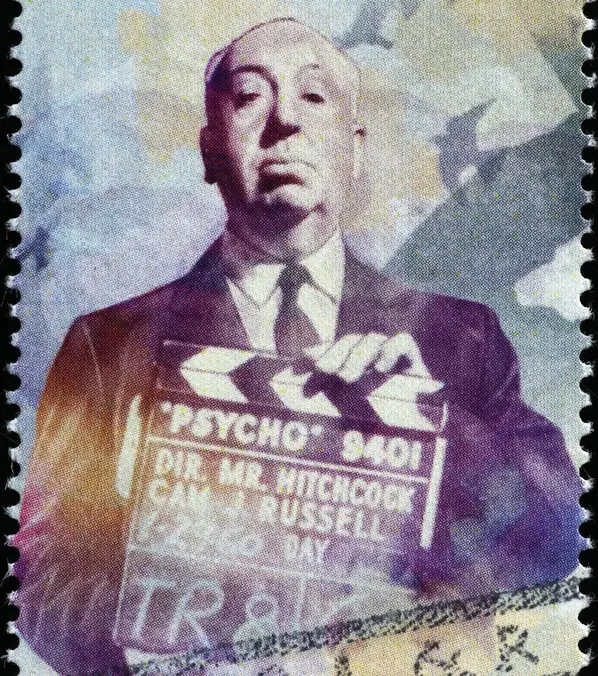
In 1960, „Psycho“ didn't just shock — it changed the rules of viewing. Hitchcock won a „no late entry“ policy: the doors of the salon close with the first shot to preserve the shock of the dramatic turn in the first act. And the famous shower scene was filmed with extraordinary precision — each take creates a rhythm close to music (and indeed: Bernard Herrmann's string soundtrack proves decisive).
The Women in Alfred Hitchcock's Life
Hitchcock was rarely „alone“. His wife and longtime collaborator Alma Revill — an editor, screenwriter, and unerring eye for detail — has been involved in many of his projects, often without the credits. It is no coincidence that when he received the AFI award, the director gave special thanks to her.
His legacy also raises uncomfortable questions. Tippi Hedren's memoirs and later publications describe toxic relationships and abuse during the making of “The Birds“ and “Marnie“ — allegations that reorder the way we read some of his themes today (fixation, power, control). Noting this does not negate the greatness of the works, but adds context to the ethics of their creation.
What does Hitchcock leave behind?
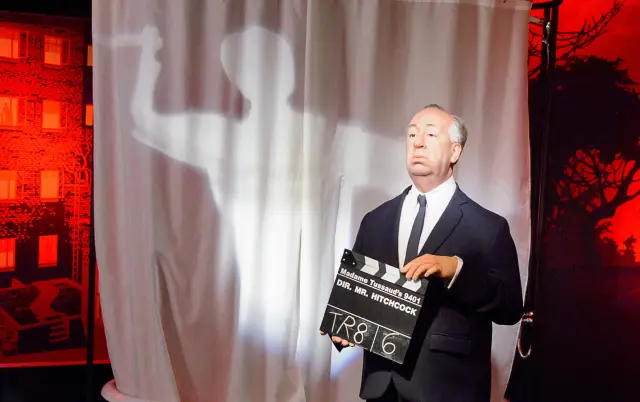
In 2012, Sight & Sound placed “Vertigo“ at the top of its prestigious Top 100 — the first time “Citizen Kane“ has been knocked off #1 in half a century. In 2022, the film ranked #2, cementing its enduring influence in the canon. This is not a “fad“ but a recognition of the unusual combination of form, theme and music (Herman) that continues to dictate how we think about point of view and obsession on screen.
Among his early titles is “The Mountain Eagle“ (1926)” — now a lost film and the “holy grail” for archivists. The very fact that we are looking for a copy almost a century later speaks volumes about its status.