


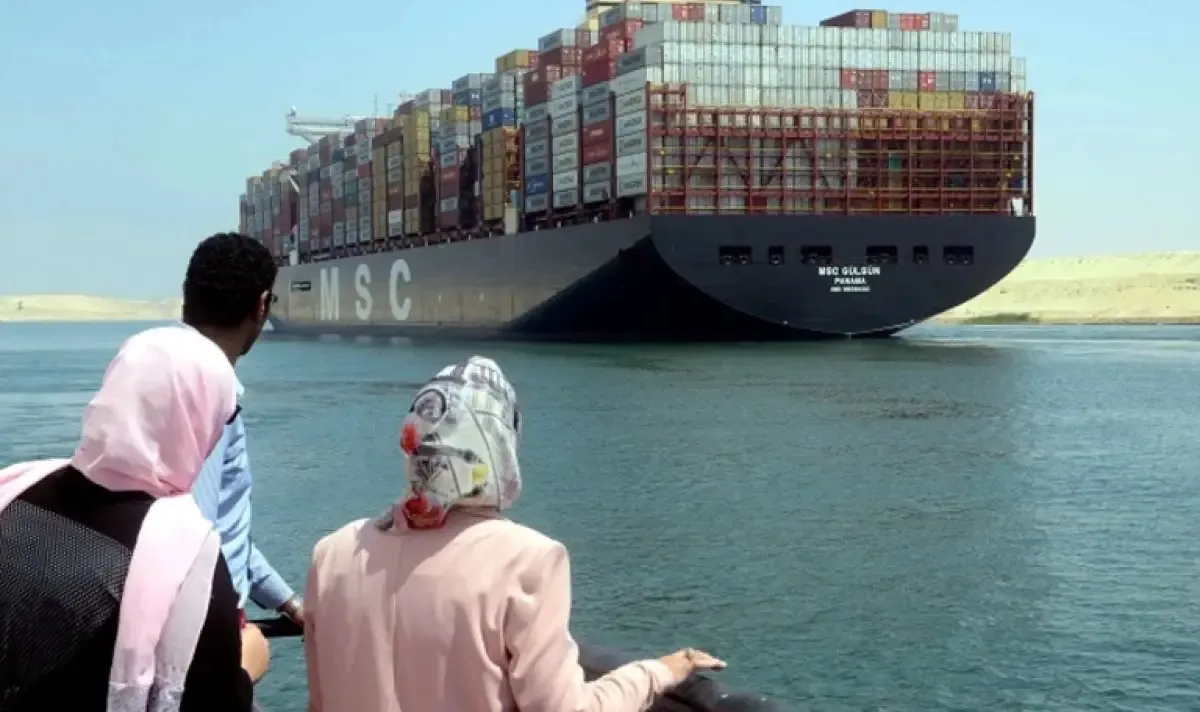

On November 17, 1869, the Suez Canal was officially opened in Egypt – the waterway that connects the Mediterranean Sea with the Red Sea through the Isthmus of Suez. As a result, ships traveling between Europe and Asia no longer had to sail around Africa via the Cape of Good Hope.
The first ideas for digging a canal between the two seas date back to Napoleon Bonaparte’s expedition to Egypt at the end of the 18th century. However, initial French calculations incorrectly assumed that the difference in the levels of the Mediterranean and Red seas made the project impossible without locks. New studies in the 19th century showed that the canal could be built as a navigable waterway with the free movement of water.
Ten Years of Construction
French diplomat Ferdinand de Lesseps received the first concession from Said Pasha in 1854, and construction began on April 25, 1859. The project was developed with the participation of Austrian engineer Alois Negrelli and was carried out by the French Suez Canal Company.
Excavation continued for about ten years. The Suez Canal Authority states that approximately 74 million cubic meters of earth were removed along the route. Historical estimates of the number of victims among the Egyptian workers are contradictory – figures range from tens of thousands to 120,000 people, but the exact number has not been established. More recent studies also highlight the lack of reliable final statistics.
On August 18, 1869, the waters of the two seas met along the canal route. The official ceremony took place three months later in Port Said. Leading the procession of ships was the French imperial yacht „Aigle,“ carrying Empress Eugénie. Among the approximately 6,000 guests were rulers, diplomats, writers and representatives of European countries.
„The great road of nations is open!“This was part of a speech by Monsignor Bauer during the ceremony, presenting the event as a meeting between East and West.
The Canal Today
When it opened, the Suez Canal was approximately 164 kilometers long and about 8 meters deep. Following subsequent expansions, its length reached 193.30 kilometers, its maximum depth is 24 meters, and the width of the water surface is approximately 313 meters. The navigable channel is between 200 and 210 meters wide.
Initially, the waterway had a single lane, but expansions and the construction of a new canal in 2015 enabled two-way traffic along a significant part of the route. The Suez Canal has no locks – water flows freely between the Mediterranean and Red seas.
Following its nationalization in 1956, the canal came under Egyptian control. Its closure after the 1967 war lasted eight years, and shipping resumed in June 1975. Today, the canal is managed by the Suez Canal Authority and remains a key link for the transport of oil, gas and cargo between Europe, Asia and the Middle East.
Sources: history.com, apnews.com, lemonde.fr