


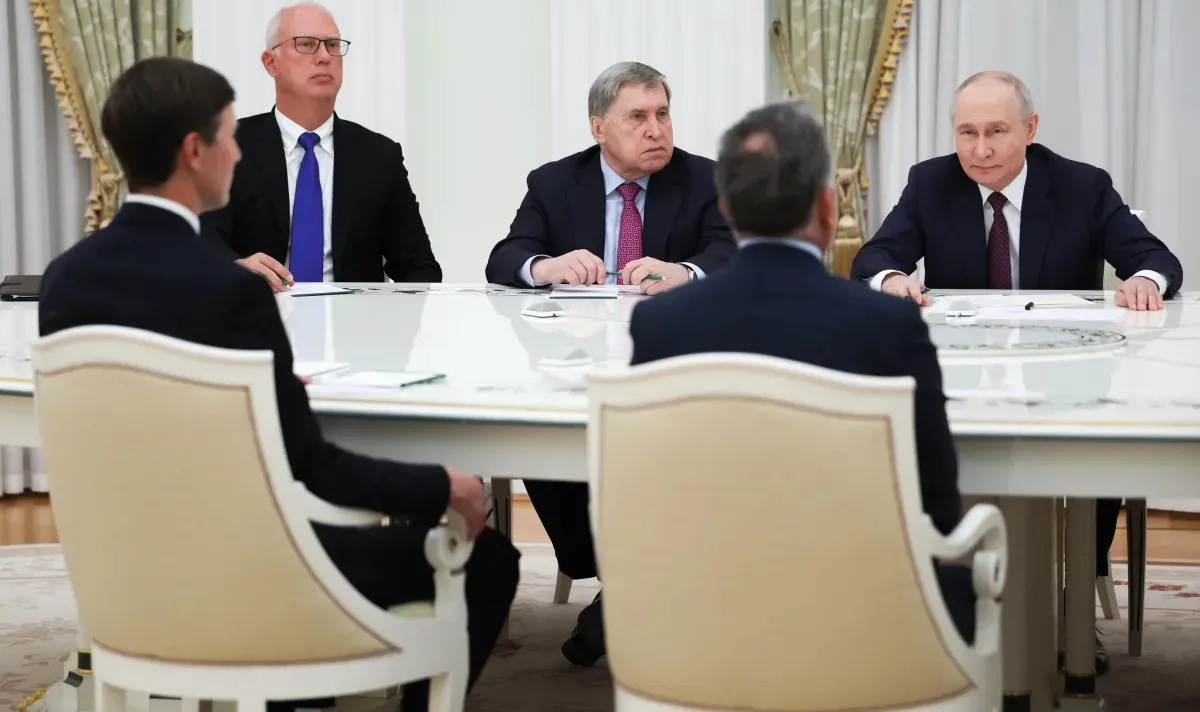

Jared Kushner said that Donald Trump is prepared to consider security guarantees for Ukraine similar to Article 5 of the NATO treaty. However, the US envoy set a condition: such a guarantee would be acceptable to the US president only if the broader European security agreement made its activation unlikely.
“Trump would take such a step only if he believed that it clearly served US national interests and that the broader security arrangements made it very unlikely that the guarantee would be used,” Kushner wrote on November 22. He уточнил that any such decision would be subject to constitutional and legislative procedures in the United States.
A NATO-Style Guarantee, but Not Membership
The idea is being discussed against the backdrop of US mediation efforts between Russia and Ukraine, led by Kushner and Steve Witkoff. On November 19 in Berlin, Kushner said that Moscow was willing to discuss a guarantee based on Article 5 of the NATO treaty.
Moscow, however, sent a different public signal. Russian Deputy Foreign Minister Sergei Ryabkov said that even “quasi-membership” for Ukraine in NATO was unacceptable. This discrepancy shows that Washington and the Kremlin are using different language for the same idea, while the specific obligations have yet to be agreed.
Article 5 does not mean the automatic deployment of troops. It defines an armed attack against one ally as an attack against all, but leaves each country to decide what actions it considers necessary. This distinction lies at the heart of the dispute over future guarantees for Ukraine.
Kushner Praises Putin as Kyiv Calls for Pressure
In an interview cited by The Associated Press, Kushner said that Vladimir Putin had shown restraint by agreeing not to use nuclear weapons. He also said that the Russian president wanted peace and described him as a “masterful politician”.
On November 27, Volodymyr Zelensky called on the United States to exert stronger pressure on Moscow. The Ukrainian president described Putin as an aggressor and a murderer and said that the Russian leader could not be called a friend. According to Zelensky, the ongoing Russian attacks show that the Kremlin is not abandoning military pressure.
The previous round of talks in Abu Dhabi did not produce a breakthrough on the main contentious issues. Humanitarian topics were discussed, including the exchange of prisoners of war and the return of Ukrainian children, but territorial issues and security guarantees remain unresolved.
Dispute Also Spills Over Into Ukrainian Strikes
The differences between Washington and its European allies also became apparent at the meeting of the Ukraine Defence Contact Group in Brussels on November 17. US Deputy Secretary of Defense Elbridge Colby said that Ukrainian deep strikes against Russian targets were not effective in stopping the Russian advance.
German Defense Minister Boris Pistorius described the criticism as a “pretty stupid thing”, while British Defense Secretary John Healey said that allies should not tell Ukraine how to fight its war.
In an analysis for The Atlantic, Eliot Cohen questioned guarantees that are not backed by concrete military capability and political will. In his view, deterrence is not an instrument in itself, but the result of the readiness and ability to respond in the event of an attack.
The next talks must clarify exactly what the US guarantee will mean, who will activate it and what assistance Ukraine will receive in the event of a new Russian attack. Until then, the phrase “based on the model of Article 5” remains a political promise rather than a signed international obligation.
Sources: theatlantic.com, apnews.com