


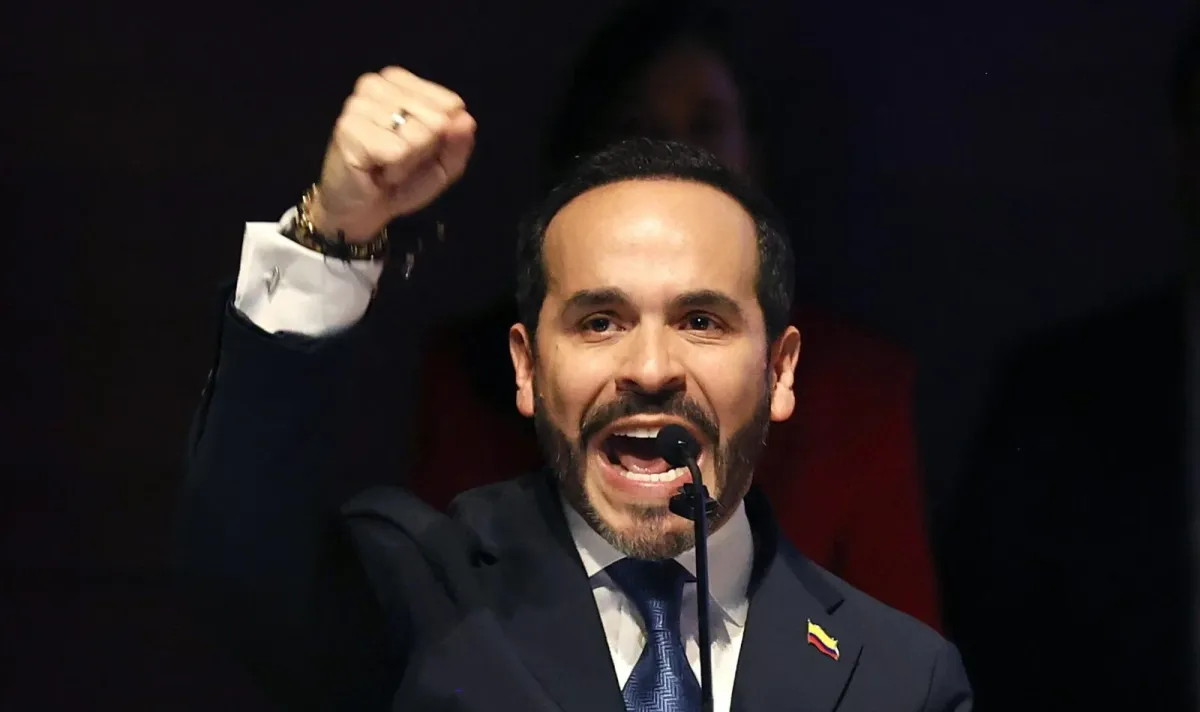

Colombian President Abelardo de la Espriella’s first 100 days in office were marked by a hard-line security policy, the termination of talks with armed groups and an attempt to curb state spending. At the same time, the government was forced to reshuffle its agenda because of the 7.4-magnitude earthquake that shook the country on August 10 – just three days after he took office.
An EFE review describes the beginning of his term as a period of radicalization, instability and a strong personal role for the president. Around 20 senior officials have left their posts, including Education Minister Viviane Morales and Interior Minister Rodrigo Lara.
The End of “Total Peace”
At the end of August, De la Espriella terminated talks with armed groups initiated by his predecessor, Gustavo Petro. The president said these organizations were showing no genuine willingness for peace and directed the government toward military and police operations against rebel, paramilitary and drug-trafficking structures.
On November 4, he signed a law on the surrender of armed groups to justice. The law creates a legal framework for the disarmament and surrender of illegal organizations, but does not grant them political recognition and ends the negotiating model used by the previous administration.
Security data are mixed. According to the Ideas for Peace Foundation, between August and September, murders fell by 10.6%, kidnappings by 66.3% and armed clashes by 61.9% compared with the same period in 2025. At the same time, attacks on infrastructure and civilian targets increased by 44.4%, while cases of the forced confinement of communities rose by 37.5%.
“This combination confirms that a reduction in certain manifestations of violence does not necessarily mean that armed groups have lost their ability to exert control or influence,” the foundation said.
Fiscal Pressure and Personnel Turmoil
The government began its term with a budget deficit of 6.4% of gross domestic product for 2025 and public debt equivalent to 60.5% of GDP. In response, the president announced spending cuts of 13.8 trillion pesos, or approximately 4.158 billion dollars, with the measure presented as a combination of savings, lower debt-servicing costs and the elimination of contracts.
De la Espriella’s team began talks with the International Monetary Fund, but no specific support has been agreed. The government also submitted an economic recovery bill aimed at curbing debt growth and strengthening public finances.
The proposal sparked opposition. Senator Iván Cepeda told EFE that the bill “seriously affects” citizens and shifts the tax burden onto households.
Political tensions intensified following problems surrounding the 2027 budget. A procedural error in Congress led to its enactment by decree, which, according to the Peace and Reconciliation Foundation, meant reduced investment and increased debt-servicing costs. The organization also reports that 18% of state positions were being temporarily filled when the first 100 days had elapsed.
The government’s next test will be to combine its hard-line security policy with measurable results in the regions and to adopt fiscal measures capable of winning support in Congress. De la Espriella simultaneously strengthened ties with the United States and restored diplomatic relations with Israel, placing security and international cooperation at the center of the first months of his term.
Sources: efe.com, elespectador.com, infobae.com