


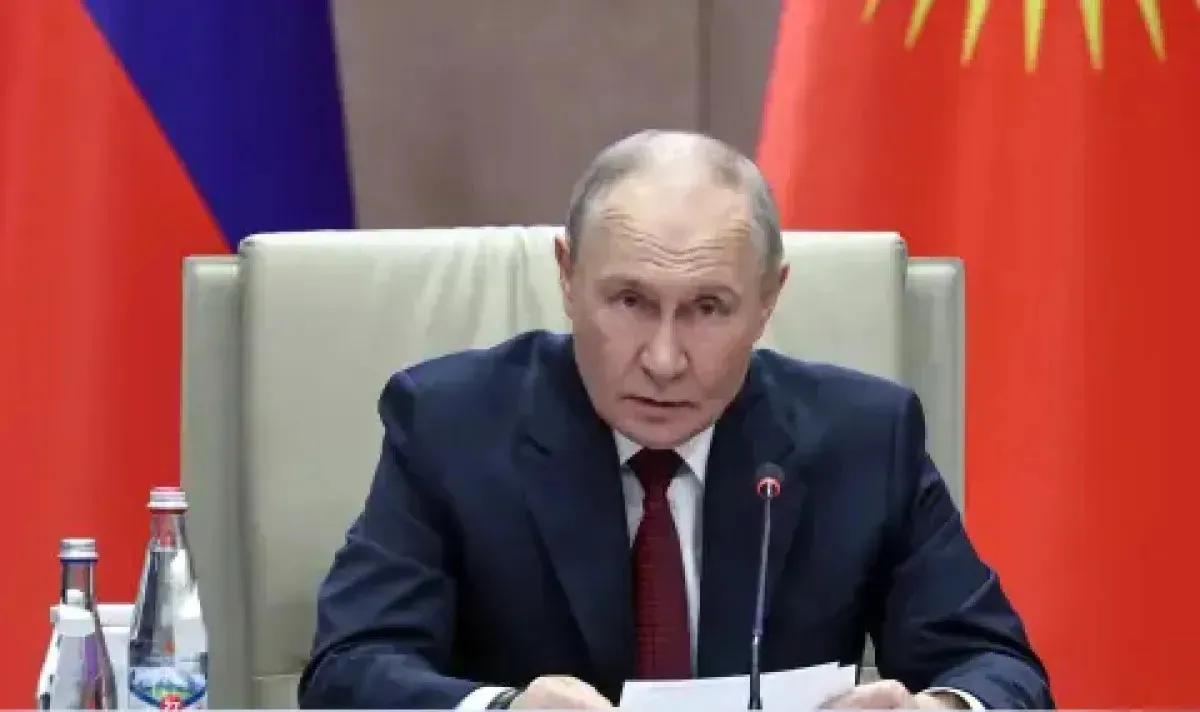

Silence in the Catherine Hall of the Kremlin was almost complete. On February 24, 2022, hours after the start of the full-scale invasion of Ukraine, Vladimir Putin gathered more than 30 of Russia’s wealthiest businessmen and made it clear that he expected their support for the war. None of those invited objected publicly.
This scene became a symbol of the relationship between the Kremlin and Russia’s billionaires. For more than two decades, the business elite has preserved its wealth but lost the political influence it wielded in the 1990s. Now some of them are already imagining what might happen after Putin’s rule comes to an end.
“I remember how the oligarchs used to walk around as if the world belonged to them. Then Putin appeared, and those self-confident men turned into completely submissive, almost desperate schoolboys,” says financier Bill Browder, a former major foreign investor in Russia and a critic of the Russian president.
Rich, but Without Political Cards to Play
Russia has a record 155 billionaires, whose combined wealth is close to $700 billion. According to Forbes’ 2026 ranking, the figure reaches $695.5 billion.
Money, however, does not give them the same influence. Inside the country, wealth increasingly depends on relations with the state, government contracts and loyalty to the Kremlin. Outside Russia, sanctions limit access to markets, private jets, yacht marinas and Western financial instruments.
“They have no cards, no game. They are rich because they have a connection to Putin, not the other way around,” says former Kremlin adviser and opposition politician Dmitry Nekrasov.
In July, Bloomberg reported that some of Russia’s wealthiest people were transferring billions out of the country because of concerns about the economy, the budget and possible confiscations. Preferred assets include cryptocurrencies, gold and property abroad. Two agency sources estimate that unofficial capital outflows during the year amounted to tens of billions of dollars.
Three Scenarios After Putin
Analysts cited by the BBC outline three possible directions. The first is democratization, but it is considered the least likely because of the weakening of institutions and years of repression. The second is a new authoritarian regime in which Putin’s successor would continue his policies, but would probably be weaker at the outset.
The third option is a return to a model reminiscent of the 1990s, when several business groups had direct access to power. This is precisely the scenario that appeals to some billionaires. “They want to return to a time when people listened to them, their assets were not taken away and they understood the rules of the game,” says analyst Alexandra Prokopenko.
According to Nekrasov, some businessmen are already trying to build relationships with “suitable representatives of the security agencies or ministers.” The wealthier ones, with more funds at their disposal, could take part in a future struggle for influence, while those dependent on government contracts risk losing everything.
Melnichenko Broke the Silence
The clearest public signal came from Andrey Melnichenko, one of Russia’s richest men and eighth on Forbes’ 2026 ranking. In an interview with The Economist, he repeated some of the Kremlin’s positions on the war and relations with the West, but at the same time spoke of the need to end one-man rule and open Russia up more fully to the world.
Journalist Arkady Ostrovsky, who spoke with Melnichenko, says their discussions were tense and lasted for hours. In his view, the billionaire was not speaking only for himself, but expressed sentiments shared by part of the business elite.
None of the other wealthy businessmen followed him publicly. Prokopenko describes the atmosphere as being based on “Stalinist fear” and recounts the story of a businessman who sat on his phone during a conversation to make potential eavesdropping more difficult.
That is why the discontent remains hidden. Browder and American financier Mike Calvey believe that Russia’s billionaires will not unite against Putin while he is alive and controls the security apparatus. The question is not whether they will try to regain their influence, but whether the successors to the current regime will allow them to.
Sources: bbc.com, themoscowtimes.com, meduza.io