


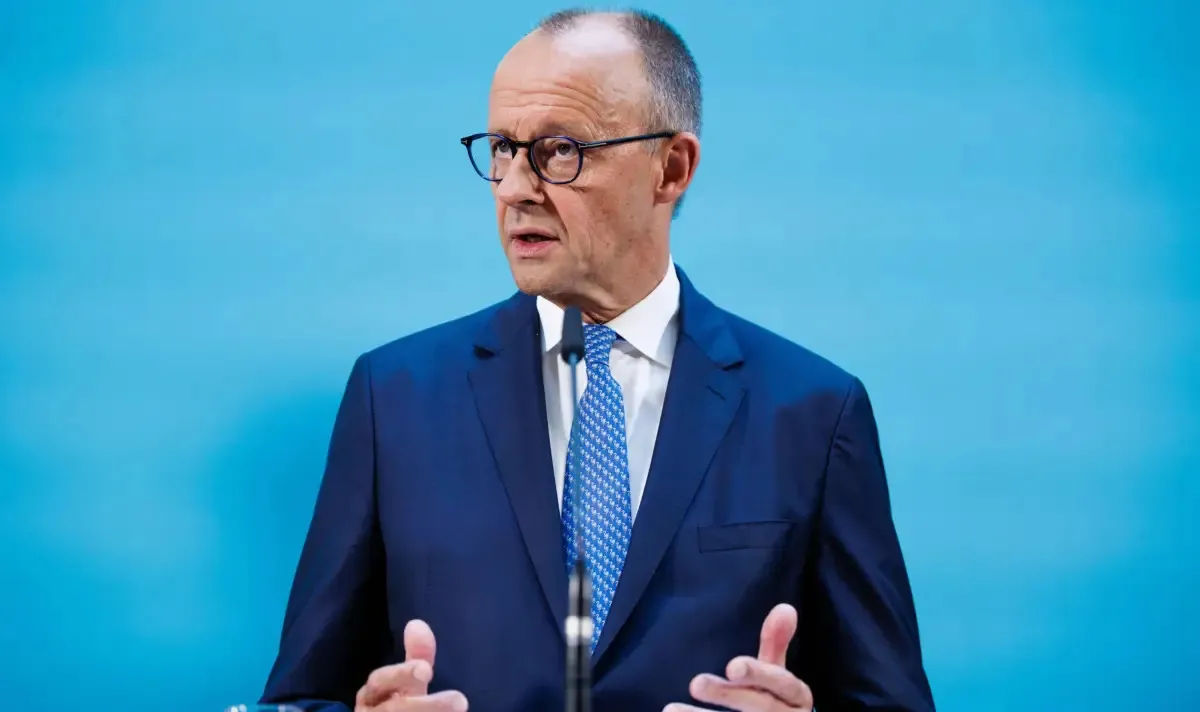

German Chancellor Friedrich Merz is once again at the bottom of INSA’s ranking of the popularity of the country’s leading politicians. He receives 2.40 points on a scale from 0 to 10 and remains in the same position as in the previous poll.
The survey was conducted between 13 and 16 November and ranked 20 German politicians. Once again, Defence Minister Boris Pistorius of the Social Democratic Party of Germany tops the list with 5.01 points. He is followed by Manuela Schwesig, Minister-President of Mecklenburg-Western Pomerania, with 4.44 points, and Baden-Württemberg Minister-President Cem Özdemir of the “Greens” with 4.40 points.
Wüst Overtakes Söder
The most significant change near the top of the list is between Hendrik Wüst and Markus Söder. The Minister-President of North Rhine-Westphalia rises to fourth place with 4.34 points, while the Bavarian premier falls to fifth place with 4.19 points.
Wüst improves his result mainly among supporters of the “Greens”, where his approval rating increases by five percentage points. He has governed North Rhine-Westphalia in a coalition with the “Greens” since 2022. Among CDU/CSU voters, however, Söder remains the most popular politician, with an approval rating of 67.4%.
Merz Is Last, Krupalla Second-to-Last
Immediately ahead of the chancellor is Tino Chrupalla, co-chairman of the “Alternative for Germany”, with 3.31 points. The leader of the “Alliance for Reason and Justice”, Sahra Wagenknecht, is in 18th place with 3.48 points.
A separate INSA assessment cited by “Bild” shows that 24% of respondents approve of Merz’s performance, while 67% rate it negatively. Thus, the chancellor’s low personal popularity is coupled with unfavourable figures regarding political support for the governing bloc.
In the latest poll on party preferences, the “Alternative for Germany” receives 28%, while the CDU/CSU gets 19%. The Free Democratic Party remains below the five-percent threshold at 4.5%. INSA director Hermann Binkert told “Bild”:
“A total of 14.5% of the votes are going to parties that fail to cross the five-percent threshold.”
The ranking highlights the difference between institutional position and personal public approval. Merz heads the federal government but remains last among the national and regional political leaders surveyed, while Pistorius retains first place.
Sources: bild.de, welt.de, en.royanews.com