


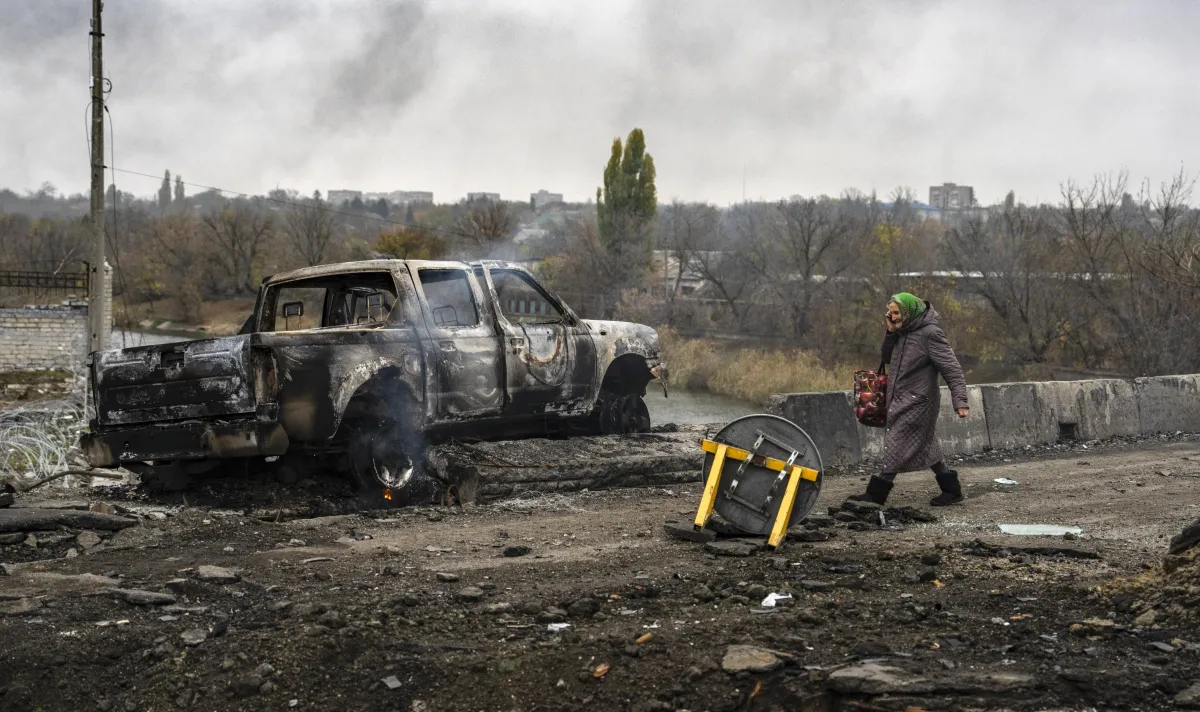

Kramatorsk and Sloviansk remain under Ukrainian control, but their populations have fallen to tens of thousands, while urban infrastructure has been severely damaged. This is the picture painted by Hungarian freelance journalist Boldizsár Győri in an article for CEPA following a trip through both cities with Sarah — an American who worked as a journalist before joining the Ukrainian armed forces.
According to Sarah’s estimate, around 20,000 people live in Sloviansk and approximately 28,000 in Kramatorsk. Between 200 and 300 people officially leave Sloviansk every week. Before the war, both cities had populations of several hundred thousand.
Kramatorsk and Sloviansk are among the largest cities in the part of Donetsk region that remains under Ukrainian control. According to CEPA, around 25% of the region’s territory remains in Ukrainian hands. Győri describes the two cities as key to Russia’s goal of establishing control over Donbas and points out that handing over the region is a key demand of the Kremlin.
Water from Tankers and Destroyed Bridges
The two cities were drawn into the war as early as 2014. In April of that year, they were seized by Russian-backed forces, and three months later they were liberated by the Ukrainian army. After the start of the full-scale invasion, they came under renewed attacks that affected residential areas, roads and key networks.
The electricity transmission, water supply and district heating infrastructure has been damaged — systems on which residents’ survival during the winter depends. In Sloviansk, a municipal water tanker drives through the streets and announces its arrival with a bell. People come out with bottles, fill them and carry them back to their homes.
“Tell an 80-year-old person living on a pension of $80 a month to leave and find a place to live somewhere else,” Sarah says.In her words, relocation is almost impossible for elderly people and those without the means to afford it. Some shops and restaurants continue to operate, but destroyed buildings, closed businesses and damaged bridges are changing daily life and movement through the cities.
Cities Turned into Landmarks for Attacks
During the journey through Kramatorsk, Sarah points out buildings destroyed days or months earlier, burned-out cars and commercial establishments whose names are now being used as landmarks during attacks. Humanitarian aid facilities in the area have also been hit. A church where aid had been distributed was struck by a Russian missile.
Győri points out that on October 8, 2026, 33 passengers were killed on a bus in Kramatorsk. He also describes the continuing danger of attacks by small FPV drones targeting people, homes, shops and cars.
“I thought that after my time in Kharkiv, I had already seen everything related to the destruction,” Sarah says. Her experience in Donetsk region, however, changed that perception.
In her view, Ukrainian forces can prevent Russia from capturing Kramatorsk and Sloviansk. At the same time, she warns that the question is how many buildings and services will remain in the cities if the destruction continues.
Sources: unian.net, cepa.org