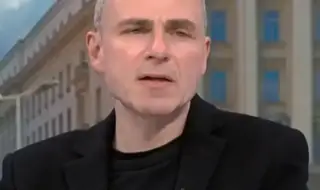
"The expectations are for the new government to start work and serve a full four-year term. The main priority will be the reform of the judicial system, a topic that has been postponed for years. In addition, the reduction of corruption in the public sphere, including at the highest levels of power, remains at the forefront. Similar messages have been heard for years, with formations such as "Progressive Bulgaria" directly pointing to the so-called "Borisov - Peevski" model and the need to overcome it. Although judicial reform is not among their top priorities, as with the PP-DB, it inevitably remains part of the process. At the moment, there is a majority, as well as opportunities for partnerships - including with the PP-DB or through independent actions. However, for constitutional changes, a broader majority will be needed, which is yet to be sought. This was commented on Radio FOCUS in the program "Metronome" by Assoc. Prof. Petar Cholakov from the Institute of Philosophy and Sociology at the Bulgarian Academy of Sciences.
Cholakov also touched on the internal tensions in the coalition between "Continuing Change" and "Democratic Bulgaria".
"The first thing they need to do is stop the seditions within this complex formula of different political forces. "Yes, Bulgaria" has already initiated talks to refine the coalition agreement with the PP and DSB. There were serious disputes around Manol Peykov, as well as disputes over deputy seats - for example, around Anna Budakova, who at 23 years old became the youngest MP after a preferential vote. This led to internal conflicts", he said.
In his words, such processes have a direct impact on the political weight of the formation.
"There is a basic principle - external strength is a reflection of internal strength. If you are weak on the inside, you will be weak on the outside and you will easily be marginalized". The political scientist also commented on the situation in GERB after the elections.
"GERB suffered a heavy electoral loss. When different people and political forces tell you the same thing for years - that you are the embodiment of a certain model - this is a signal of a serious problem. A clear trend is also visible - the party no longer has the majorities from the period after 2009. This means that we need to seriously think about reform".
According to Cholakov, the question of the party's future is complicated because of its leadership character.
"This is a classic leader's party, in which the leader holds the main resource and influence. If he withdraws or is removed, the question arises of what happens next for the party itself", he said, and also made a comparison with Rumen Radev.
"Radev does not have comparable financial resources as Boyko Borisov. This could be a problem, although he has undisputed authority and is one of the most recognizable political figures. The question is whether this is enough".