The European Parliament and Council reach agreement on the “Novakov“ regulation - after 13 years of stalemate, the EU improves passenger rights.
After 10 months of tough negotiations, balancing the interests of travelers and the industry, and fending off attempts to weaken passenger rights, the European Parliament (EP) and the Council reached a historic agreement. 13 years after the first attempt at reform, the work of the last year has proven decisive for the new rights of air passengers.
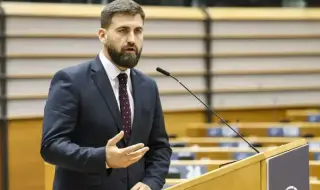
The Bulgarian MEP from GERB/EPP, Andrey Novakov, was elected as the EP's lead negotiator and sponsor of the regulation.
“About a year ago, I took responsibility for this regulation and my position was clear – passenger rights are not a bargaining chip. When a flight is delayed or cancelled, it is not just a statistic. It is a missed family occasion, a job interview, a cancelled holiday, which no one can get back. Thanks to today's success, when citizens board a plane, their rights will not be left on the ground. In the end, a simple principle prevailed – "We can sell seats, luggage, priority boarding and all kinds of additional services, but we must not sell humanity, respect and treatment of passengers," said Novakov.
The importance of the legislative file is unprecedented in the mandate of this Parliament. This was precisely the reason why the President of the institution, Roberta Mezzola, was directly involved in the negotiation process and was present during the trilogues.
“Today's agreement marks an important step forward for the millions of Europeans who rely on air transport every day. "I would like to thank our rapporteur Andrei Novakov, the Vice-Chair of the Committee on Transport and Tourism (TRAN) Virginijus Sinkevičius, the entire European Parliament negotiating team, as well as the Cyprus Presidency and Commissioner Tsitsikostas for their efforts to move this process forward and help us reach an acceptable agreement," said Roberta Metsola.
The deal between the EP and the Council has brought about several unprecedented changes for the benefit of travellers. Despite strong pressure from the industry and some Member States, passengers will receive compensation for delays of three hours. The amounts of compensation are also maintained, so that consumers are not disadvantaged. If a flight is cancelled or delayed by more than 3 hours, the airline is now legally obliged to inform passengers about the ways to obtain compensation, without them having to seek their rights themselves.
Parents will no longer pay an additional fee to sit next to their children on board the aircraft, and strollers will be able to be used right up to the aircraft door and returned immediately after landing, instead of parents having to look for them on the baggage carousel.
People with reduced mobility will be able to seek compensation if they miss a flight due to a lack of necessary assistance at the airport.
Another positive development is that the price of the flight ticket will include hand luggage by default, which will allow a real comparison between the different offers of airlines. If the passenger does not need a small cabin suitcase, he can forgo it and pay less for his ticket. Fees for administrative corrections of a name or spelling error in the ticket are also waived. If the first flight of a round-trip ticket is not used, the airline will no longer be able to automatically cancel the return flight or charge additional fees.
The new regulation strikes the right balance – protecting passenger rights while providing predictability and legal clarity for the European aviation sector. For the first time, a comprehensive list of force majeure circumstances is introduced, under which carriers are not liable for delays or cancellations.