


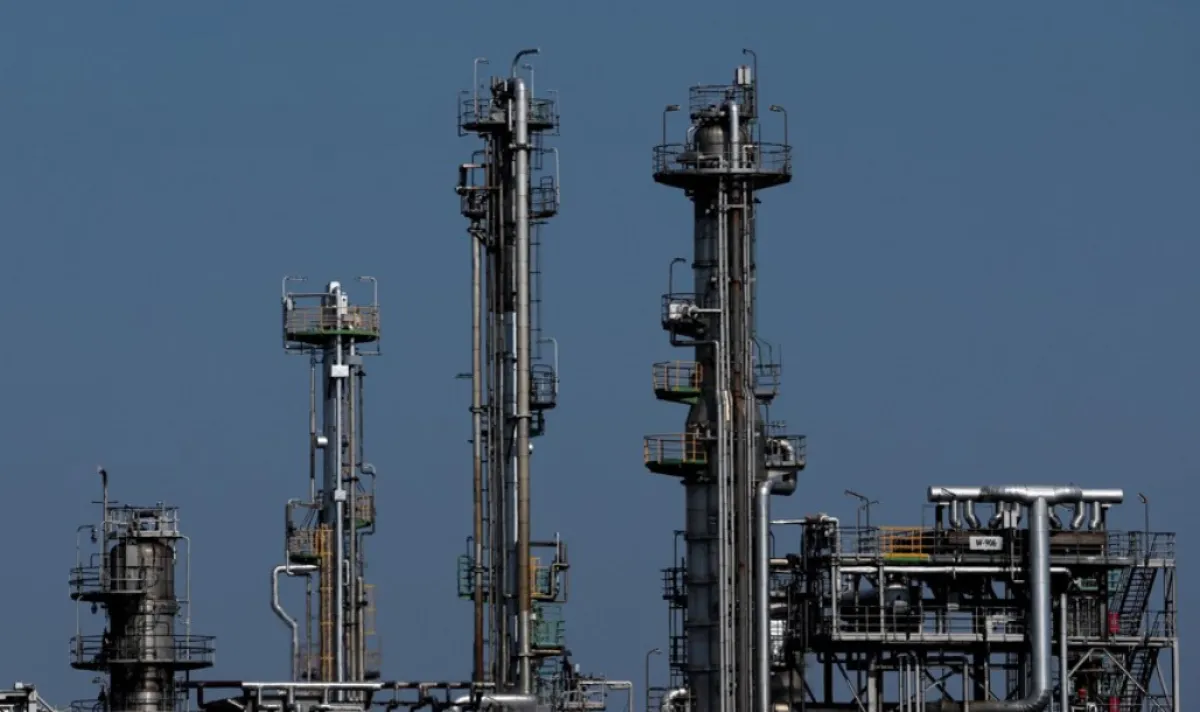

Saudi Arabia will start storing crude oil in Singapore from the second half of 2027 as part of a new strategy to strengthen supply security for Asia after serious disruptions to trade through the Strait of Hormuz.
The Saudi oil will be stored in the underground Jurong Rock Caverns complex on Jurong Island - one of the key facilities in Singapore, which is among the most important centers for trading and storing energy raw materials in Asia.
The agreement was announced on October 26 during the Singapore International Energy Week. Singapore's Energy Market Authority (EMA) and state-owned JTC Corporation have signed a memorandum of understanding with Saudi Aramco as a first step towards finalizing the scheme.
The negotiations are expected to be concluded within a few months.
The new system should both make the Saudi oil supply chain in Southeast Asia more resilient and provide Singapore with additional protection in the event of a future supply disruption.
Jurong Rock Caverns is located about 150 metres underground on Jurong Island.
The underground complex can store up to 1.47 million cubic metres, or approximately 9 million barrels, of liquid hydrocarbons, including crude oil and condensate.
However, it has not yet been announced how much Saudi oil will be stored there, nor what portion of the facility's total capacity will be made available to Saudi Aramco. The financial terms of the future agreement have not been disclosed. The strategic logic is to physically locate oil closer to some of Saudi Arabia's most important customers. Saudi Energy Minister Prince Abdulaziz bin Salman said that bringing supplies closer to key Asian markets would increase the flexibility of the Saudi network and help Singapore be prepared for potential supply problems.
The decision comes after severe disruptions to energy supplies through the Strait of Hormuz as a result of the war between the United States and Israel and Iran. Before the conflict, Asia received about two-thirds of its oil needs from the Middle East. The disruption of traffic through Hormuz has forced a number of countries to use part of their reserves and has once again raised the question of the region's vulnerability to disruption of major sea routes. For Singapore, the issue is particularly sensitive. The city-state has virtually no energy resources of its own and its economy is heavily dependent on the stability of international supplies. Minister for Energy, Trade and Industry Tan See Leng warned that the Strait of Hormuz crisis would not be the last such shock and that Singapore needed to have several lines of defense against disruptions. The country already maintains reserves of gas and diesel, and its power plants must be able to run on both types of fuel. Singapore is not the first Asian country in which Saudi Aramco is building a similar system. The Saudi company already stores crude oil in Japan and South Korea. The model allows Aramco to have reserves close to its major customers, while giving the host country additional protection in the event of a sudden shortage. In Japan, Saudi oil reserves in Okinawa are about 8.2 million barrels. The partnership began in 2010, and in 2025 the agreement was extended for another three years. Saudi Aramco also has a similar arrangement with Korea National Oil Corporation. In 2023, the companies signed a five-year agreement to store 5.3 million barrels of oil in reserve facilities at the South Korean port of Ulsan.
In case of shortages, local authorities receive priority access to the stored quantities.
The new partnership between Saudi Arabia and Singapore is part of a broader shift in Asia's energy strategy.
China, Japan and South Korea have significant oil reserves, but most other Asian economies have much less protection against prolonged supply disruptions.
Japan is also trying to expand regional cooperation through the Partnership in Wide Energy and Resources Resilience Asia (POWERR Asia) initiative, backed by a $10 billion grant. USD. Singapore is also expanding its energy partnerships with other Gulf states. It has renewed a memorandum of understanding with QatarEnergy to cooperate on liquefied natural gas and low-carbon technologies and has established a joint energy working group with ADNOC of the United Arab Emirates. The crisis in the Strait of Hormuz is thus accelerating a shift that could have long-term consequences for the global oil trade. Instead of relying solely on continuous supplies from the Middle East, major producers and Asian consumers are starting to build a network of strategic reserves closer to end markets. For Saudi Arabia, this means greater export security and flexibility. For Singapore – an additional buffer against the next geopolitical disruption of energy supplies.Oil 150 metres underground
The Hormuz crisis changed the strategy
Saudi Arabia is already using the model in Japan and South Korea
Asia builds protection against the next energy crisis