


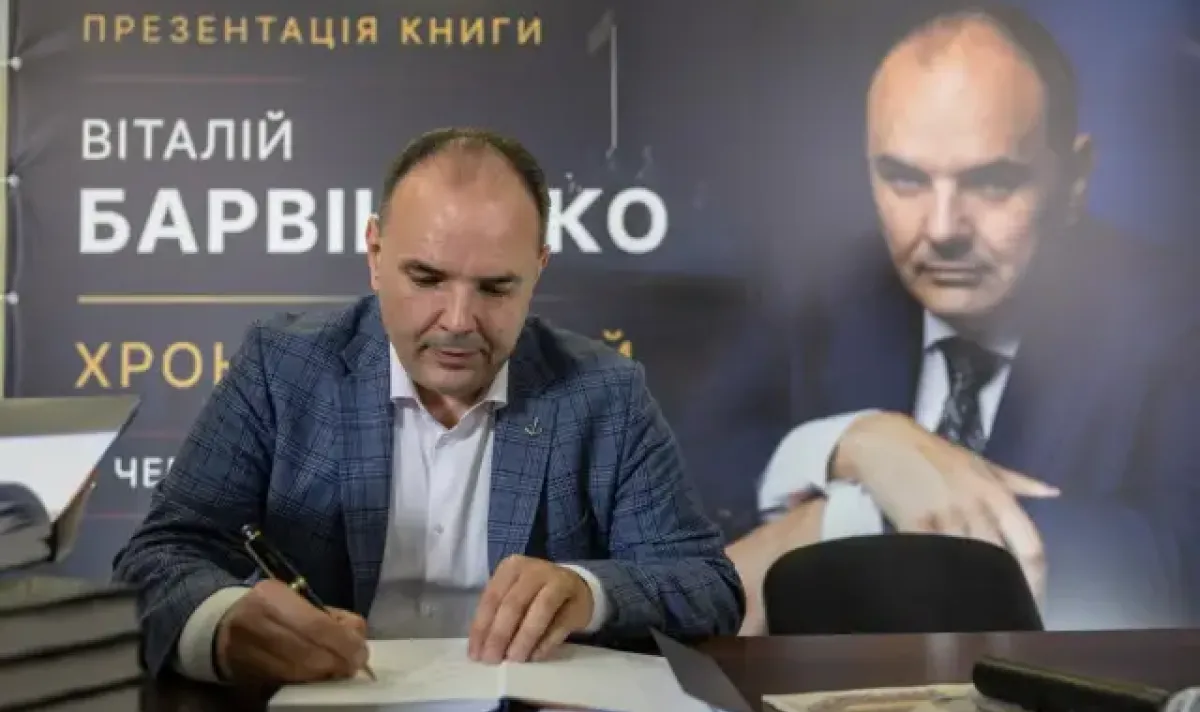

Peace in Ukraine remains a distant prospect, while Russia and Ukraine continue to hold incompatible positions, and the US and European countries fail to achieve unity on key security issues. What are the growing risks in the Black Sea, where the war is increasingly affecting commercial shipping and the security of the countries in the region? Vitaly Barvinenko, a Ukrainian politician and former People's Deputy of the Verkhovna Rada of Ukraine with three parliamentary mandates (2007-2019), spoke to FACT.
– Mr. Barvinenko, a new round of negotiations is expected in the US in November. How realistic are the hopes for progress? Is it possible to reach an agreement this time?
– I do not believe in the effectiveness of these negotiations, because the participants have different approaches and diametrically opposed positions. Volodymyr Zelensky said that he does not see any possibility for Ukraine to agree to territorial concessions or to reduce its army. On the other hand, Vladimir Putin has repeatedly stated that he will not accept an agreement that does not take into account the conditions that he considers essential. For Moscow, it is important that Crimea and the occupied Ukrainian territories are recognized as Russian. Also important are the issues of Ukraine's future relations with NATO, the security architecture and guarantees that would prevent a new conflict.
The problem is that at the moment no one can provide guarantees that would satisfy all parties. One of the reasons is the lack of a unified position among NATO members themselves. The positions of the United States, Europe and Turkey differ significantly.
– Where do Europe and NATO stand in this negotiation process? Can we talk about unity in the Alliance?
– The positions of Europe and the United States are diametrically opposed. In this situation, what kind of unity in NATO can we talk about? There is currently no such unity on key issues. We must also take into account the fact that Donald Trump is focused on his domestic political problems and the crisis surrounding Iran. Tomorrow there will be elections in Israel, which Prime Minister Netanyahu will lose. There will be a change of power. It is extremely important for Trump to understand what the position of the US allies in the Middle East will be, and towards Iran. All these factors affect the possibility of reaching an agreement between Russia and Ukraine. Therefore, I believe that if a meeting takes place in November, at, let's say, a working level, it will not lead to a significant breakthrough. I do not see any real prerequisites for a peace agreement in the near future.
Additional uncertainty is also created by the political situation in Europe. The upcoming elections in France in April could seriously change the European position. Until it is clear what the configuration of power there will be and what course Paris will take, it is difficult to expect a sustainable agreement between Russia, the United States and Ukraine. Macron's candidate enjoys 5% support. If Le Pen wins, France will be different and we will see what the country's attitude towards the EU will be in general.
– Donald Trump has repeatedly stated that Vladimir Putin is ready to make a deal. How can we distinguish between a real readiness for negotiations and attempts to gain time and military or political advantage?
– President Trump's words are changing and we should treat his statements about Ukraine with a certain amount of skepticism. American analysts have made a statistical sample, according to which over the past two years Trump has repeatedly stated that a peace agreement between Russia and Ukraine is closer than ever. According to their data, such a statement has been made 56 times. However, real peace has not been achieved. This shows how big the gap is between political messages and actual results.
Russia is also aware of this situation. If Moscow does not see at least a fundamental convergence between the positions of the US and Europe, we can hardly expect it to engage seriously in negotiations.
We have repeatedly seen how the American side undermines the positions of Europe, and European countries oppose various initiatives by Trump. To this we must add the interests of China and Russia.
Ultimately, Putin faces one important question: who will guarantee the implementation of a possible peace agreement, since there are such serious disagreements within NATO itself?
– If an agreement is nevertheless reached in November, what mechanisms can guarantee its implementation and a real ceasefire?
– At present, no effective mechanism has been developed. President Zelensky proposed the creation of an international group under the auspices of the UN, which would develop specific criteria and procedures. But such an initiative must be followed by real work and clear decisions.
A number of practical questions need to be answered. Who will define and physically mark the line of demarcation between the two armies? Who will monitor compliance with the ceasefire? How will the zones of control be defined and how will violations be prevented? Who will monitor the implementation of the agreements and what will be the consequences of their violation?
None of the major international actors have yet provided concrete and practically applicable answers to these questions.
This is a serious problem for Ukraine. Thousands of people are dying while various ideas are being discussed, but the major international players are not presenting a concrete plan of action. I have been involved in diplomacy for a long time and I understand the difference between political messages on social media and in the media and real work on the ground. We can have all sorts of declarations and statements, but without practical steps they are of no particular value.
It is precisely the lack of such work that makes me believe that the prospect of a ceasefire is not close.
– Does this mean that the war could turn into a protracted conflict?
– Unfortunately, there is such a danger. If a working ceasefire mechanism is not found, the conflict could drag on for years, similar to the protracted wars in Afghanistan – 10 years, and Vietnam – 7 years.
This would be a difficult scenario not only for Ukraine, but also for all participants in the process, including Europe. Sometimes it may seem that the war is limited to the territory of Ukraine, but the consequences are already being felt far beyond its borders. The situation in the Black Sea is especially indicative.
– The Black Sea is becoming an increasingly dangerous area for shipping. What determines its growing strategic importance?
– The Black Sea has already become a space of strategic confrontation not only between Russia and NATO, but also between countries with different interests in the region, including Turkey and Romania. The risks for commercial shipping are increasing. According to the information we are discussing, since the beginning of the year, more than 40 merchant marine sailors have died, and 570 ships have been hit. Military risks can also lead to a significant increase in the cost of insuring ships.
This shows that the Black Sea is no longer just a regional problem related to the war between Russia and Ukraine. It is becoming an area where the interests of several countries and NATO as a whole intersect. Therefore, we should not underestimate the possibility of the conflict expanding and directly affecting other countries in the region.
– Romania insists on a more active role for NATO in the Black Sea. How do you assess the idea of creating a special security center in the region and what should be the role of Bulgaria?
– The Foreign Minister of Romania – Dan Neculaescu, who was the country's representative in NATO for many years, is already talking about creating a separate NATO security center in the Black Sea. This will require close coordination between the three allied countries in the region — Bulgaria, Romania and Turkey. Romania is raising this issue with increasing urgency. Such an initiative may have its reasons from a security perspective, but the possible consequences must also be carefully assessed. Russia will not remain without reaction if it perceives such a center as a further strengthening of NATO's military presence in the Black Sea. Thus, an initiative presented as a security measure may lead to a new escalation of tensions.
Therefore, the main task is to show political wisdom and not allow the Black Sea to finally become a zone of direct military action.
This is not just a matter of Ukrainian shipping or trade through the straits. It is about the risk of a wider conflict that could also affect NATO member states.
– What should Bulgaria and the other countries in the region do to avoid being drawn into an even greater confrontation?
– I believe that this should be one of the main strategic topics in the political and public debate. At the moment, Bulgaria and Romania in particular are facing the risk of the region being drawn into an even more serious confrontation. This does not mean that countries should neglect their own security or their commitments to NATO. It means that decisions must be made with a clear understanding of the possible consequences and with efforts to prevent escalation. It is important to have coordination between Bulgaria, Romania and Turkey, as well as a broader dialogue on security in the Black Sea. It is necessary to seek a balance between protecting allies and avoiding steps that could turn the region into an even more dangerous war zone.
I hope that responsible politicians in Bulgaria understand the seriousness of the situation. After the end of the election cycle, the country should have the opportunity to make more sustainable and mature political decisions. Because the stake is no longer only the future of the war in Ukraine. The stake is the security of the entire Black Sea region and the risk of expanding the conflict.
Professor Vitaly Barvinenko, Doctor of Law, is a Ukrainian politician, a former people's deputy of the Verkhovna Rada of Ukraine with three parliamentary mandates (2007-2019). He was born in 1981 in Belgorod-Dniester, Odessa region. He graduated from Odessa National University “I. I. Mechnikov“ with a degree in “International Economic Relations“ and has an education in the field of public administration and law. Before his political career, he worked in local administration and the agricultural sector. As a deputy, he participated in committees related to construction, regional development and law enforcement. Over the years, he has been a representative of various political formations and an independent candidate. After the end of his parliamentary career, he continued to work in the field of public administration and the analysis of political processes in Ukraine.