


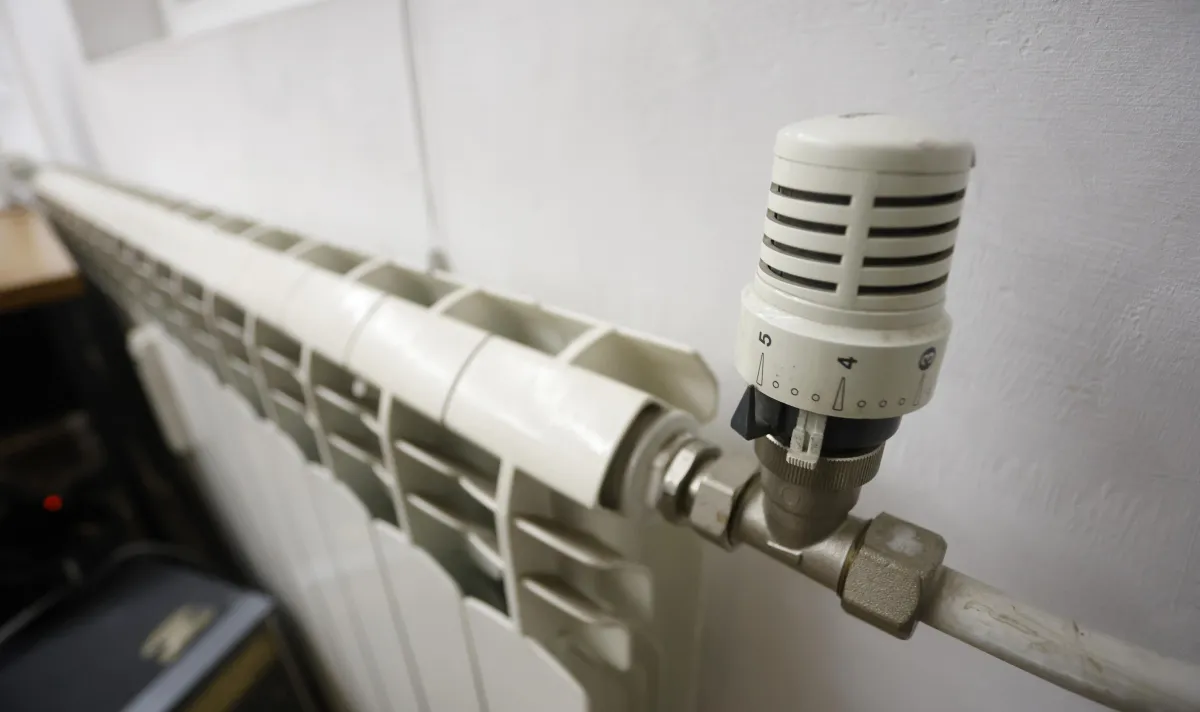

Around 500 breakdowns on the network of “Toplofikatsia Sofia” have yet to be repaired. More than 200 people and over 15 teams with heavy machinery are working on site, the company’s executive director Petar Petrov said after a meeting with Sofia Mayor Vasil Terziev.
More than 50 faults have been repaired over the past week and a half. According to Petrov, however, the current resources are insufficient to deal more quickly with the accumulated breakdowns, which is why the company is already holding talks on hiring additional workers and equipment.
The problems affect parts of “Mladost”, “Druzhba” and “Studentski Grad”, where some customers remain without heating and hot water. According to the executive director, the affected customers account for around 2% of all the company’s consumers. He stressed that the issue concerns specific areas, not the whole of Sofia.
Petrov linked the breakdowns to ageing facilities, whose repair requires heavy machinery and time. “The lasting solution to the problem is to replace the network,” he said, calling on the Sofia Municipal Council to adopt the company’s business plan. It provides for the replacement of as many sections of the network as possible next year.
Problems Continue After the Expected Completion of Repairs
As early as October 14, Mayor Vasil Terziev said he expected the repairs by “Toplofikatsia Sofia” to be completed by mid-November, so that the heating season would not begin with new interruptions. Subsequently, however, breakdowns continued to affect Sofia neighbourhoods and student dormitories.
The Energy and Water Regulatory Commission began an extraordinary inspection of the company on September 21 following numerous complaints and information about systematic interruptions in heat supply. The regulator said it would also assess whether there were grounds for compensating customers in the event of interruptions exceeding the permissible period of 48 hours.
At the briefing, Petrov said that the company was doing everything possible to emerge from the emergency situation, but that the long-term outcome depended on investments in the heating transmission network. Terziev said a solution had to be found during the current season, especially for the affected parts of “Mladost”, “Druzhba” and “Studentski Grad”.
Sources: dnes.dir.bg, bta.bg