


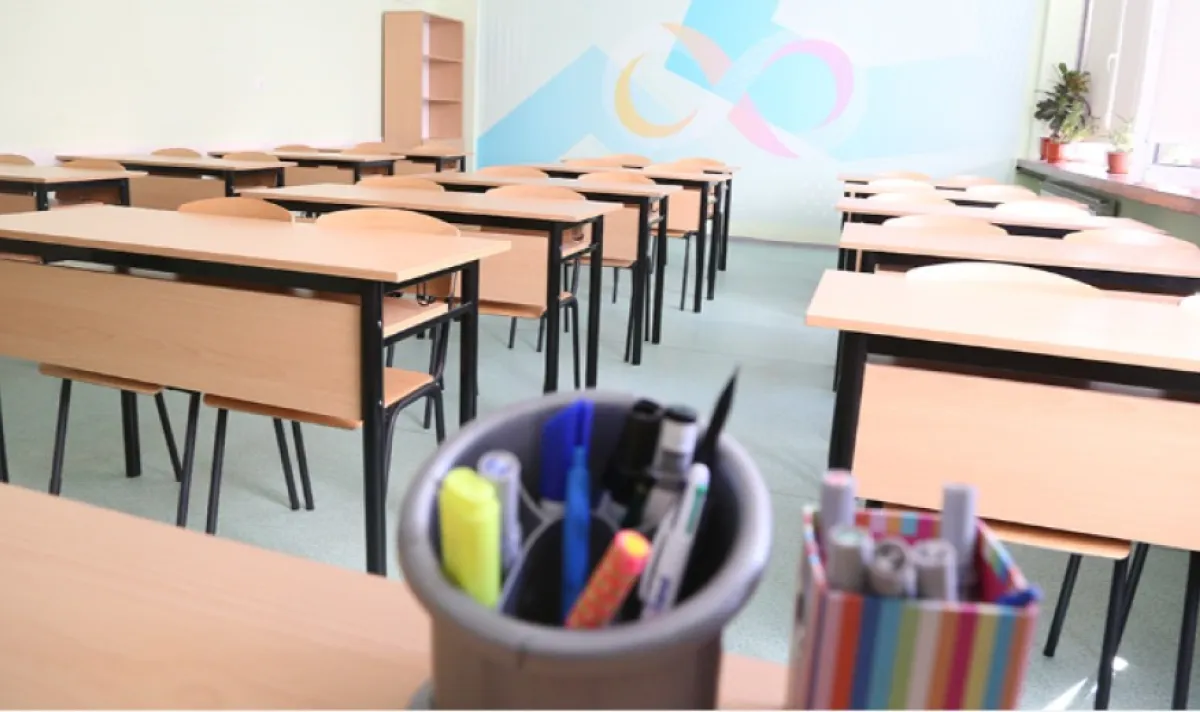

High electricity bills are putting the budgets of schools and kindergartens under financial pressure. Against this backdrop, MPs from GERB-SDS warned that, in some educational institutions, electricity costs could make it difficult to pay teachers’ salaries. The claim was made by MP Zhecho Stankov and, at present, has not been accompanied by publicly identified specific schools or debt amounts.
“We have information that many schools and kindergartens across the country will not be able to pay their teachers’ salaries because their electricity bills have consumed their budgets,” Stankov said, as quoted by BNT. He identified high electricity and fuel prices as the main problem.
What the proposal envisages
Zhecho Stankov, Yordanka Fandakova and Krasimir Valchev have submitted, between the first and second readings of the 2027 budget, a proposal for electricity compensation for nurseries, schools, kindergartens, and student and school dormitories. The scope also includes children’s sports schools, community cultural centres, churches and monasteries, as well as municipalities’ expenses for street and square lighting.
The idea is for these institutions to pay electricity prices comparable to those paid by household consumers. According to Fandakova, education and public services should not bear the burden of costs that are rising without a corresponding increase in funding for their operation.
“Under conditions of financial restrictions, it is not fair for this to come at the expense of education and young people,” Yordanka Fandakova said.Krasimir Valchev said that inflation and the decline in the share of education spending relative to gross domestic product were leaving schools and kindergartens to cover higher operating costs with the same financial resources.
Other MPs also called for support
We Continue the Change and Democratic Bulgaria also submitted proposals between the two readings of the budget. They envisage kindergartens, nurseries, schools and student dormitories paying electricity prices applicable to household consumers.
MP Radoslav Ribarski told BNT that a similar arrangement had been in place in 2022, 2023 and 2024. According to MPs from the coalition, the average electricity price in November is expected to be around €260 per megawatt-hour. This figure was cited as an indicative value in parliamentary statements, not as the final average price for the entire month.
What mechanism is currently in place
The Council of Ministers has already adopted a compensation programme for non-household end customers for the period from 1 September 2026 to 30 June 2027. It provides for the aid to be calculated based on the difference between the average price on the “Day-Ahead” segment of the Bulgarian Independent Energy Exchange and a base value of €122.71 per megawatt-hour excluding VAT.
The maximum compensation is up to 80% of that difference. The exact percentage will be determined after the ten-month period has expired, depending on the funds available in the Electricity System Security Fund. The government programme covers non-household customers, but the parliamentary proposals submitted specifically and explicitly seek to protect educational institutions as well.
For now, there is no final decision on whether schools and kindergartens will receive a separate scheme or additional compensation. The proposals are yet to be discussed during the second reading of the 2027 budget.
Sources: bnrnews.bg, bntnews.bg, flagman.bg