


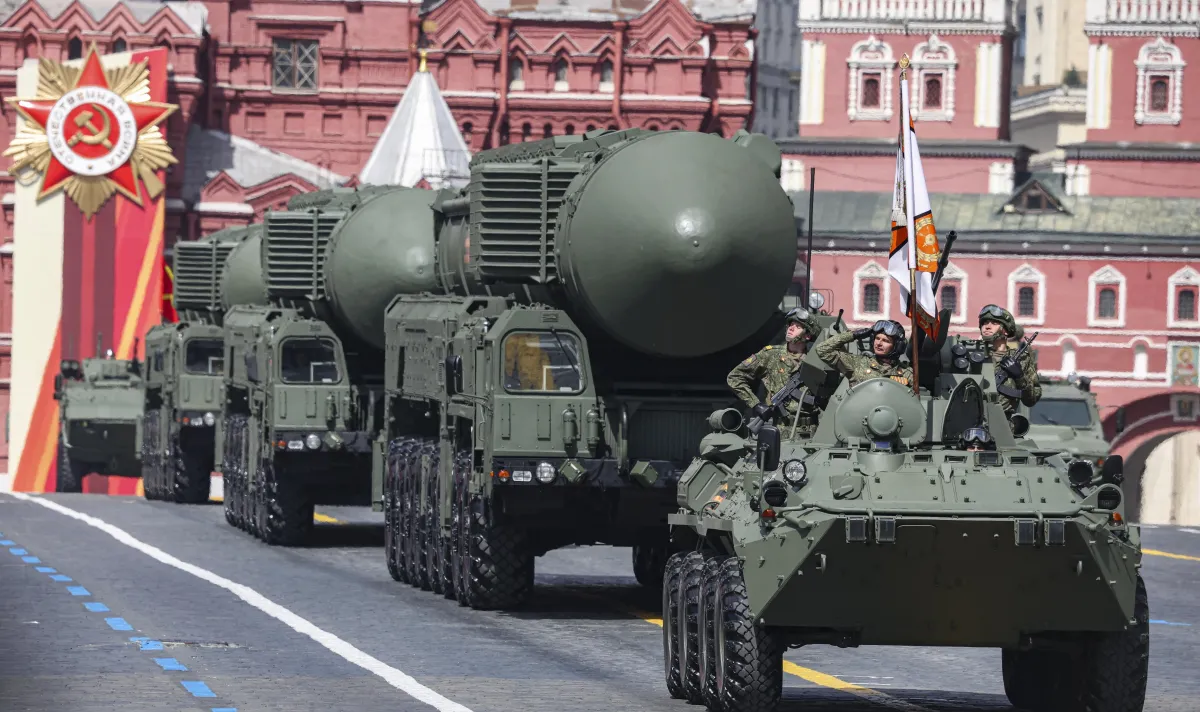

Europe is underestimating the risk of a larger war with Russia and should not take it for granted that the United States will always guarantee the security of the continent. This is what British investor Guy Hands writes in an analysis for LBC.
Hands compares the attitude toward threats to European security with a mistake he says he made in business. In his words, people often accept only the facts that confirm what they want to believe and ignore risks when the consequences would require costly or unpopular decisions.
The Four Seasons Health Care parallel
As an example, he cites Four Seasons Health Care, a company he worked with. Hands says he believed the company could improve the quality of care, become more efficient and receive significantly greater government funding for elderly care.
According to him, care was improved and the debt burden was reduced, but the main expectation did not materialize. The government did not provide the additional funding he had expected. “I wanted to believe that the people telling me this were wrong. They were not wrong,” the investor writes.
Hands uses this case to describe European security policy as well. After the end of the Cold War, European countries reduced defense spending and military capacity because they believed that a major war on the continent was unlikely and that the United States would provide their protection.
More Than Supplies at Home
According to Hands, Britain’s preparations should not be limited to instructions for households about what they should store. He raises questions about available ammunition and the ability to produce it quickly, as well as the resilience of energy grids, satellites, ports, telecommunications, financial systems and undersea cables.
The investor also warns about dependence on supply chains controlled by countries that could become adversaries in a crisis. In his words, answering these questions will require Britain and Europe to allocate significantly more funds to defense.
Drones, Artificial Intelligence and the Civilian Economy
Hands, however, is calling not only for greater spending but also for a different approach to investment. He points out that relatively inexpensive drones can already destroy equipment worth millions, while software, artificial intelligence, robotics and cyberattacks are as important as ships, aircraft and missiles.
In his view, Europe should draw on Ukraine’s experience, as the country has been forced to deploy new technologies because of the need to defend itself. These investments could simultaneously strengthen defense and support the civilian economy through higher productivity, technological development and the restoration of manufacturing capacity.
Hands warns against creating “a huge subsidized program for yesterday’s defense industry.” He calls for entrepreneurs and smaller companies to take part in the process, while the technologies being developed should also have applications outside the military sphere.
In his analysis, the investor writes that the purpose of serious preparations for war is to make war less likely. “Hope is not a strategy,” is his conclusion, accompanied by an admission that he hopes that in 2035 he will prove to have been overly negative in his assessment of the risk from Russia and the future role of the United States.
Sources: lbc.co.uk