


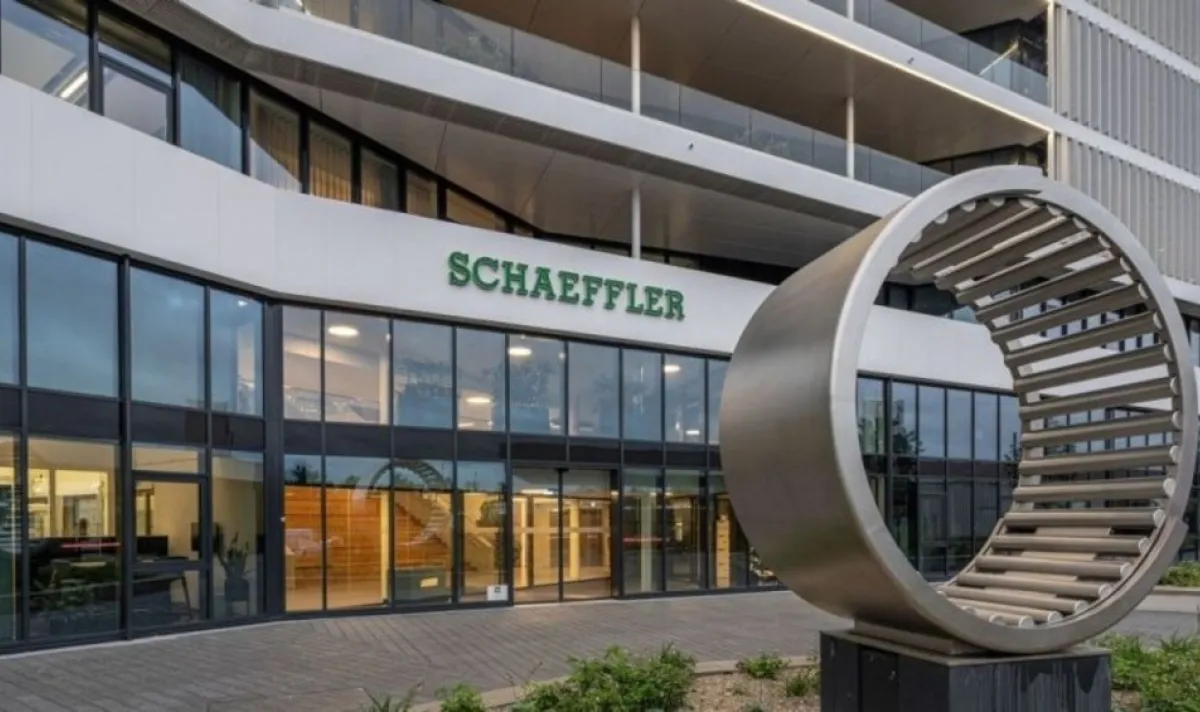

German industrial giant Schaeffler, which has established itself as one of the world’s largest manufacturers of automotive components and industrial equipment, has announced the launch of a new restrictive cost-optimisation programme. The restructuring strategy envisages cutting 3,460 jobs across Europe, including 2,660 in Germany, while four production facilities will be permanently closed.
The affected positions at the company’s German divisions, where the group currently employs nearly 32,000 people, represent around 9 percent of its total workforce in the country. When the new measures are added to previously approved redundancy programmes, the overall proportion of employees laid off at the German subsidiaries could reach a worrying 18 percent.
The hardest hit by the crisis is the division producing parts and components for traditional internal combustion engines. Management’s plans envisage the complete shutdown of the plant in Dortmund, which provides jobs for 430 workers, as well as the facility in Morbach, located in the federal state of Rhineland-Palatinate, where 160 people will lose their jobs.
The wave of closures will also affect the production sites in Berlin and Schwalbach, near Frankfurt am Main. In the capital, 270 jobs will be cut, while a large proportion of the approximately 385 employees in Schwalbach will be offered the opportunity to transfer internally to the company’s plant in Frankfurt. In addition to the direct closure of these four locations, the group plans a major reorganisation and reduced production volumes at its plants in Hochstadt, Erlangen, Schweinfurt, Herzogenaurach, Bühl, Nuremberg and Regensburg.
The anti-crisis programme will also directly affect employees’ financial conditions, with the remaining staff being offered the option of voluntarily giving up part of their remuneration over the next two years. According to management statements, this unpopular measure is the brake preventing an even larger wave of layoffs.
The company’s financial projections indicate that the full implementation of the recovery plan will improve its annual balance by around €300 million from 2030 onwards. Chief Executive Officer Klaus Rosenfeld noted that the one-off costs of carrying out the comprehensive restructuring amount to €480 million. The main driver behind these radical measures remains the severe crisis in Europe’s automotive sector and the need to adapt to the changing market environment.