


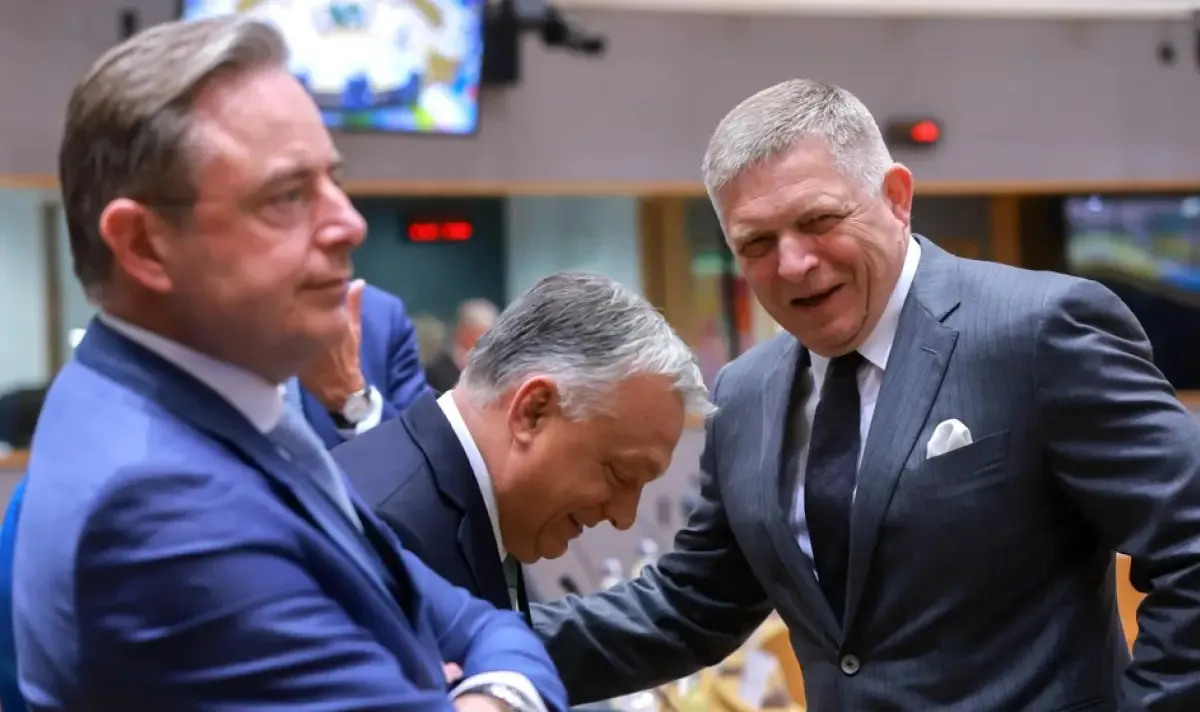

Slovakia is ready to make compromises in order to reach an agreement on the European Union’s long-term budget for the 2028–2034 period by the end of the year. Slovak Prime Minister Robert Fico said this in Brussels following a meeting of the European Council.
According to him, the meeting on 26 November was devoted entirely to the future multiannual financial framework. Fico gave a positive assessment of European Council President António Costa, who listened to the positions of all countries, including those calling for spending to be limited.
“No concessions were made yesterday. I was not left with the impression that anyone had expressed a willingness to embark on the path of compromise,” Robert Fico said.The Slovak prime minister said he was ready to make concessions, but insisted that his country’s specific circumstances be taken into account. Among them, he pointed to the large agricultural holdings and the level of the cap on direct payments to producers.
Three contentious issues
The talks between the European leaders focused on three main issues: the overall size of the budget, the distribution of funds and the introduction of new sources of revenue.
According to Fico, some countries want the budget to be increased, others are calling for the proposed framework to be reduced, while the “Friends of Cohesion” group opposes cuts aimed at reducing regional disparities and cuts to the common agricultural policy. Slovakia is part of this group.
Fico cited €1.8 trillion as a compromise amount proposed by Costa. However, the proposal published by the European Council on 21 November puts the total size of the budget package at €1.582 trillion. The document provides for the average national contribution to rise from 0.80% to 0.82% of the member states’ gross national income, while the new own resources are expected to generate around €60 billion annually.
Higher contributions in exchange for maintaining funding
Fico said that Slovakia would remain among the countries receiving more funds from the EU budget than they contribute to it. He compared the future financial framework with the recovery plan, as the disbursement of funds would be linked to specific objectives, milestones and stricter conditions.
“If we want to remain a net recipient of European funds, we must be prepared to increase our contribution to the EU budget,” the Slovak prime minister said.He did not specify an exact amount for Slovakia’s future contribution, as it will depend on the final size and structure of the budget.
Before the European Council meeting, Fico had taken a tougher position. On 23 November, he said that the Czech Republic, Hungary, Poland, Slovakia and Austria considered the budget proposal at the time unacceptable. The five countries called for the cohesion policy and the common agricultural policy to be preserved, as well as for a higher threshold for subsidies to large agricultural holdings.
Negotiations will continue until the EU summit in December. If the leaders reach a political agreement, it will serve as the basis for the legislative act on the multiannual financial framework, which must then receive the consent of the European Parliament. The aim is for the legislation to be adopted in 2027 so that funding under the new budget can begin in January 2028.
Sources: bta.bg, newsnow.tasr.sk