


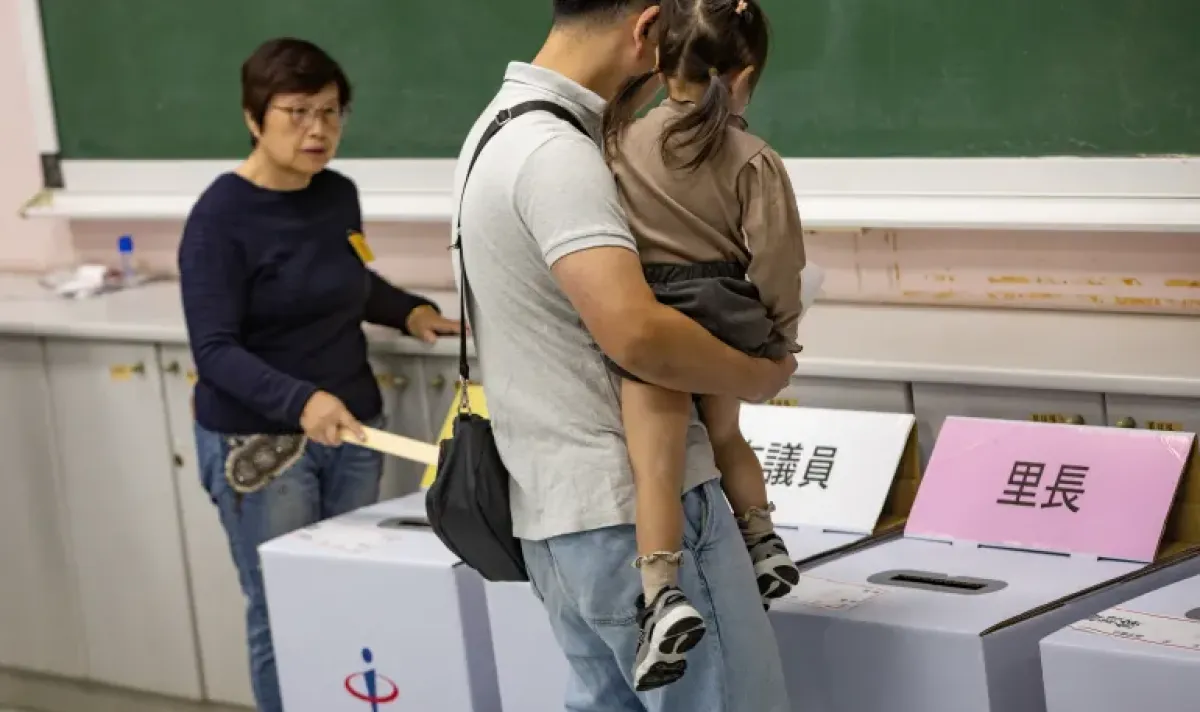

Taiwanese are voting for mayors, county magistrates, city councilors and other local representatives in elections being held simultaneously in 22 cities and counties. Around 19.58 million people are eligible to vote, and there are 18,244 polling stations in 8,906 districts. More than 300,000 officials are involved in the electoral process.
The elections, known as the „nine-in-one“ elections, include 11,051 local positions. In the six largest metropolitan areas – Taipei, New Taipei, Taoyuan, Taichung, Tainan and Kaohsiung – voters are electing mayors, while in the other parts of the island the vote is for mayors or magistrates of cities and counties, as well as for local legislative bodies.
Close contest for the capital
In Taipei, incumbent Mayor Chiang Wan-an of the opposition Kuomintang is facing lawmaker Puma Shen of the ruling Democratic Progressive Party. The contest is among the most closely watched, as the capital is an important political center and is often seen as a possible stepping stone to a national career.
The campaign in the capital focused mainly on local issues – transportation, the urban environment, social services and housing affordability. Relations with China and security were present in the political backdrop, but did not dominate messages to voters. Assistant professor of political science Sanho Chung told The Associated Press that „they have nothing to lose in these elections,“ referring to the parties and candidates seeking political gains from the local vote.
A test ahead of the presidential election
The results will show the level of support for the ruling party of President Lai Ching-te outside national elections. A victory in key cities such as Taipei, New Taipei or Taichung would give the Democratic Progressive Party a stronger position in selecting candidates and shaping messages ahead of the 2028 presidential election.
Local elections, however, are not a direct referendum on national policy. Analysts warn that voters’ behavior in local elections is often determined by specific urban problems and the personal popularity of candidates, rather than solely by attitudes toward the government or China.
A national referendum on nuclear energy is also being held alongside the local elections. More than 20 million people can take part in it, which is more than the number of voters in the local election because of the different participation requirements. Voting ends at 4:00 p.m. local time, after which counting begins and the first results are expected.
The previous local elections in 2022 ended with a clear advantage for the Kuomintang, which won 14 mayoral and county magistrate posts, while the Democratic Progressive Party won five. The new vote will show whether the ruling party has managed to change that balance and whether the opposition will retain its influence in local government.
Sources: apnews.com, focustaiwan.tw, malaysia.news.yahoo.com